
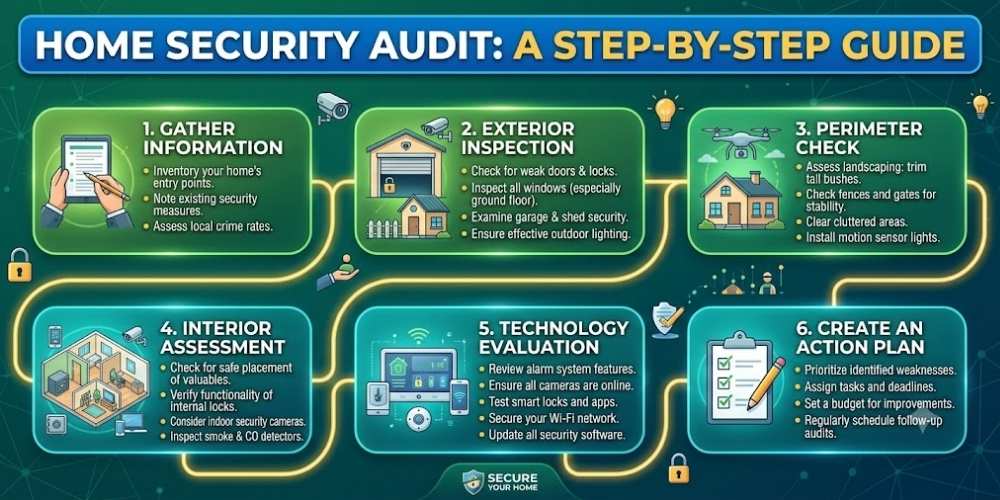
Home Security Audit: A Step-by-Step Guide
Quick summary: A home-security audit examines both physical and digital risks. The goal is to find weak points, prioritize improvements, and document a practical response plan.
A home-security audit examines both physical and digital risks. The goal is to find weak points, prioritize improvements, and document a practical response plan.
This guide explains the most important actions in a practical order. Focus on measures that reduce real risk, are easy to maintain, and fit the way your household uses technology.
Map Entry Points and Valuable Areas
List doors, windows, garages, sheds, and rooms containing important equipment or documents.
Note weak lighting, hidden approaches, and damaged locks.
Review Cameras and Alarms
Test camera angles, night visibility, motion alerts, alarm sensors, batteries, and notification delivery.
Confirm that timestamps are correct and recordings can be retrieved.
Audit Accounts and Permissions
Review household users, administrator access, shared passwords, recovery details, and active sessions.
Remove access for old devices, guests, contractors, or former residents.
Test Network and Device Security
Update the router, check encryption, review connected devices, and isolate smart products.
Patch computers, phones, cameras, hubs, and locks.
Create an Improvement Plan
Rank findings by likelihood and impact. Fix exposed accounts, unsupported devices, and broken physical controls first.
Record completion dates and schedule the next audit.
Key Takeaway
Security improves when simple protections are applied consistently. Keep systems updated, limit unnecessary access, use strong account protection, and review settings whenever devices or household needs change.
Frequently Asked Questions
How long does a home security audit take?
A basic audit may take a few hours, while larger homes and complex smart systems may require more time.
Should I hire a professional?
Professional help can be useful for alarms, complex CCTV, electrical work, or high-risk situations.
What should be fixed first?
Prioritize risks that could lead to account takeover, unauthorized entry, loss of evidence, or exposure of sensitive data.

Vital Morgan is a cybersecurity researcher and technology writer with a passion for digital privacy, smart home security, and online safety. He specializes in creating practical guides on VPNs, password protection, cybersecurity best practices, smart home devices, and emerging security technologies. His mission is to help readers protect their homes, devices, and personal information in an increasingly connected world.