How to Evaluate a VPN Privacy Policy
Quick summary: A VPN provider can see important connection information, so its privacy policy matters. Marketing pages may be simple, but the policy reveals what data is actually collected and retained.
A VPN provider can see important connection information, so its privacy policy matters. Marketing pages may be simple, but the policy reveals what data is actually collected and retained.
This guide explains the most important actions in a practical order. Focus on measures that reduce real risk, are easy to maintain, and fit the way your household uses technology.
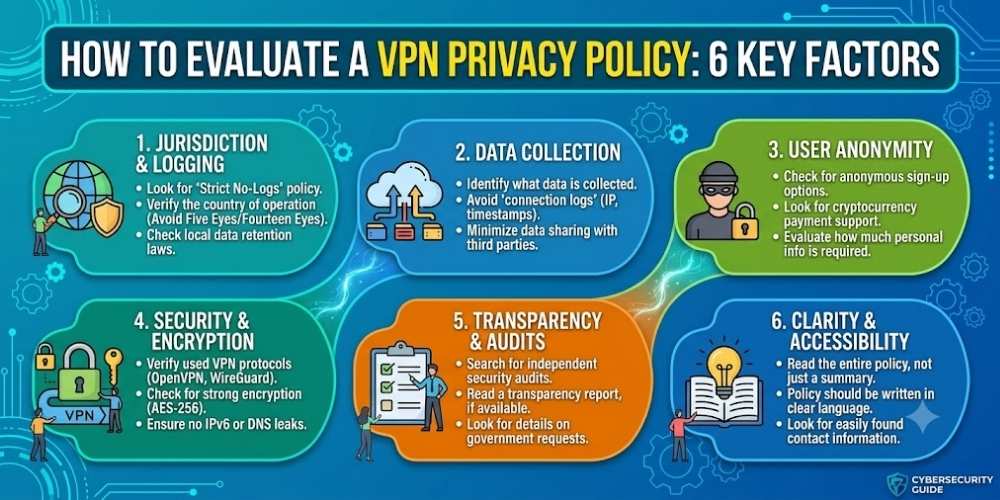
Identify What Data Is Collected
Look for references to IP addresses, timestamps, device identifiers, bandwidth use, browsing activity, payment data, and support records.
Separate operational data from browsing or connection logs.
Check Retention Periods
A policy should explain how long each category of data is kept. Vague phrases such as as long as necessary deserve closer attention.
Shorter retention generally reduces exposure if systems are breached or legally requested.
Review Ownership and Affiliates
Find out which company controls the service and whether data may be shared across a corporate group.
Ownership can affect jurisdiction, accountability, and data-sharing practices.
Look for Independent Verification
Independent audits, transparency reports, and court-tested claims can provide stronger evidence than advertising alone.
Check the audit scope and date rather than assuming every audit covers all systems.
Understand Exceptions
Even no-logs policies may allow collection for fraud prevention, account management, or legal compliance.
Read the exceptions carefully and decide whether they match your risk level.
Key Takeaway
Security improves when simple protections are applied consistently. Keep systems updated, limit unnecessary access, use strong account protection, and review settings whenever devices or household needs change.
Frequently Asked Questions
What does a no-logs VPN mean?
It generally means the provider claims not to store browsing or connection activity, but the exact definition varies by provider.
Are VPN audits always reliable?
Audits are useful, but their value depends on scope, independence, testing methods, and how recently they were completed.
Why does VPN ownership matter?
Ownership can influence legal jurisdiction, data sharing, and whether multiple VPN brands are controlled by the same company.

Vital Morgan is a cybersecurity researcher and technology writer with a passion for digital privacy, smart home security, and online safety. He specializes in creating practical guides on VPNs, password protection, cybersecurity best practices, smart home devices, and emerging security technologies. His mission is to help readers protect their homes, devices, and personal information in an increasingly connected world.