How to Shop Safely Online
Quick summary: Online shopping is convenient, but fake stores, counterfeit listings, payment scams, and phishing messages can turn a good deal into a costly problem.
Online shopping is convenient, but fake stores, counterfeit listings, payment scams, and phishing messages can turn a good deal into a costly problem.
This guide explains the most important actions in a practical order. Focus on measures that reduce real risk, are easy to maintain, and fit the way your household uses technology.
Verify the Store
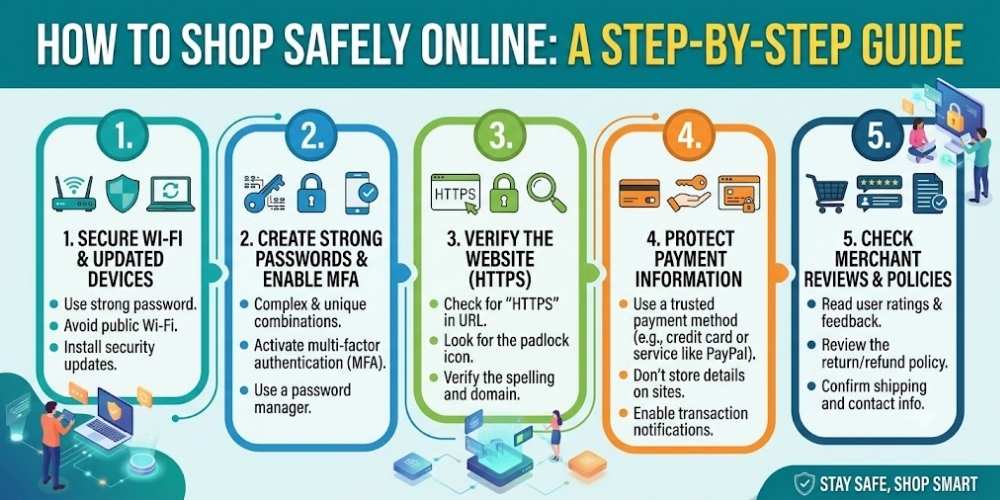
Check the domain name, contact details, return policy, and independent reputation before paying.
New or unfamiliar stores with extreme discounts deserve extra caution.
Use Safer Payment Methods
Credit cards and reputable payment platforms may offer stronger dispute options than bank transfers, cryptocurrency, or gift cards.
Avoid sellers who insist on irreversible payment methods.
Watch for Fake Reviews
Look for repeated wording, sudden bursts of five-star ratings, and reviews that do not discuss the actual product.
Compare information across several independent sources.
Avoid Delivery Phishing
Scammers send fake parcel messages asking for small fees or account verification.
Open the retailer or courier website directly instead of using the message link.
Keep Evidence
Save order confirmations, product descriptions, seller messages, and payment receipts.
This information can help during disputes or fraud reports.
Key Takeaway
Security improves when simple protections are applied consistently. Keep systems updated, limit unnecessary access, use strong account protection, and review settings whenever devices or household needs change.
Frequently Asked Questions
How can I tell if an online store is fake?
Look for suspicious domains, missing contact details, unrealistic prices, copied text, and requests for irreversible payment.
Is a padlock icon enough to trust a store?
No. HTTPS protects the connection but does not prove that the seller is legitimate.
What should I do after paying a scam store?
Contact the payment provider quickly, preserve evidence, change exposed passwords, and report the store to relevant authorities.

Vital Morgan is a cybersecurity researcher and technology writer with a passion for digital privacy, smart home security, and online safety. He specializes in creating practical guides on VPNs, password protection, cybersecurity best practices, smart home devices, and emerging security technologies. His mission is to help readers protect their homes, devices, and personal information in an increasingly connected world.